CLC Ag & Energy Center, Centra Sota, University of Minnesota Soil Health and USDA-NRCS partner to provide hands-on training for agriculture and conservation professionals
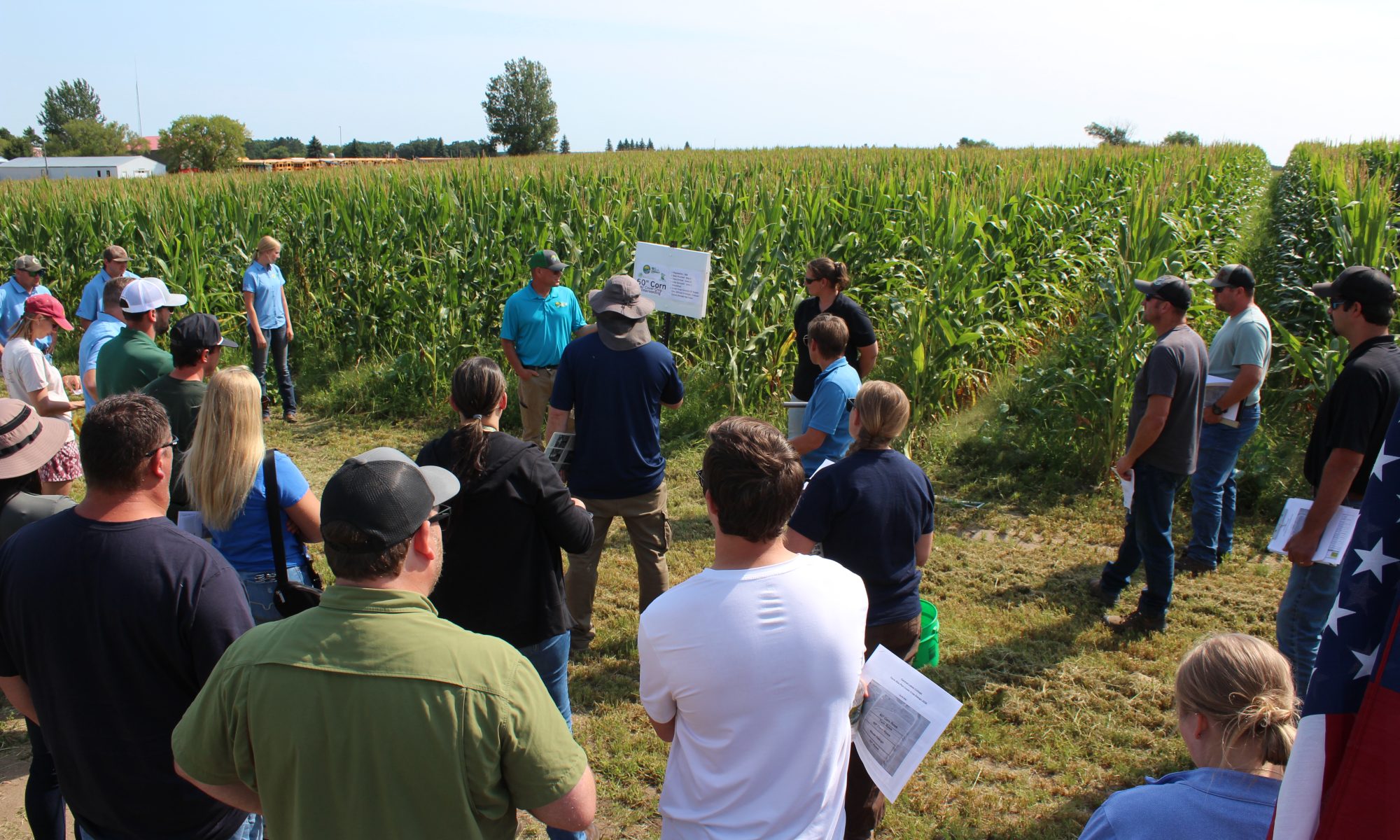
Staples, MN – Agriculture and conservation professionals gathered at the Central Lakes College Ag & Energy Center in Staples on Friday, August 14, for a classroom and field-based training focused on soil health testing.
The training was developed through a partnership involving the CLC Ag & Energy Center, Centra Sota Cooperative, the University of Minnesota Soil Health team and the USDA Natural Resources Conservation Service.
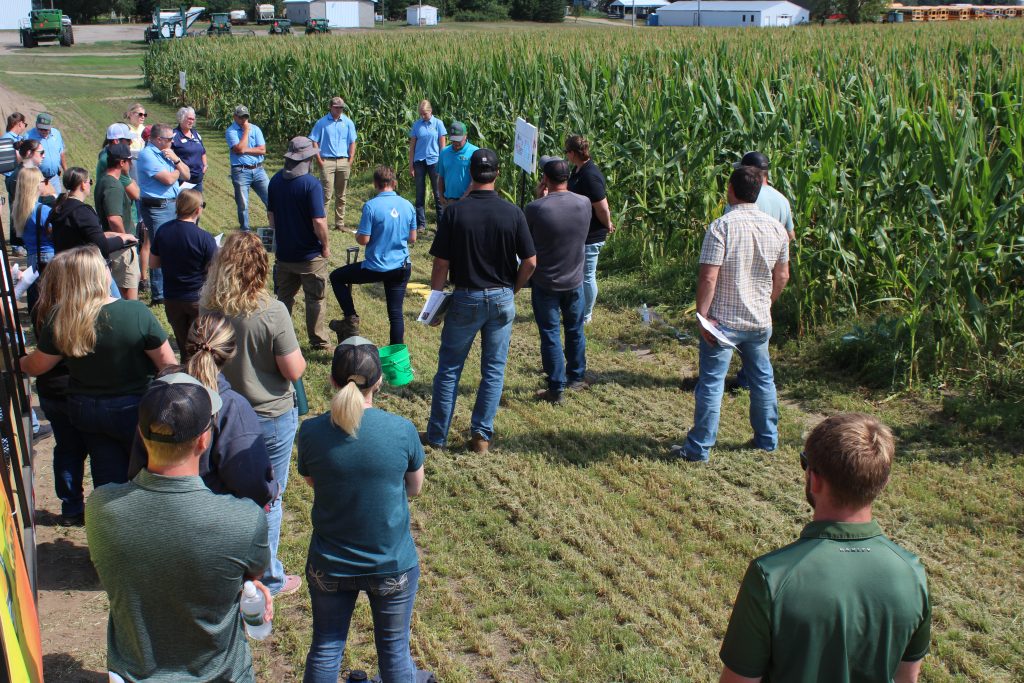
Participants began in the classroom, learning how to properly plan, collect, store, submit and interpret soil health samples that meet the requirements of Conservation Evaluation and Monitoring Activity 216, commonly known as CEMA 216.
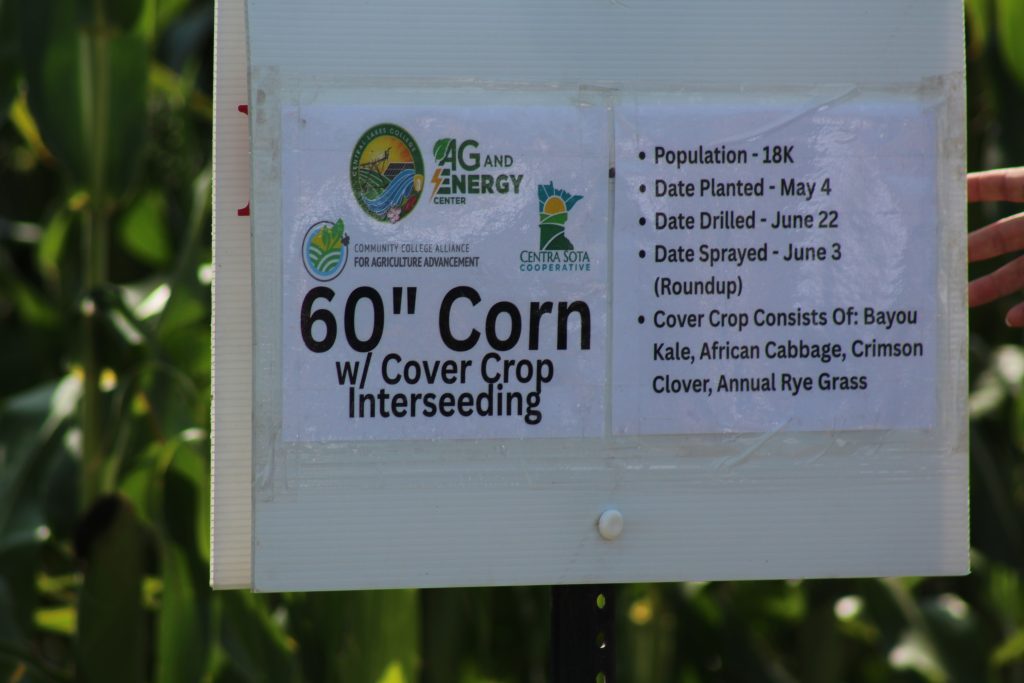
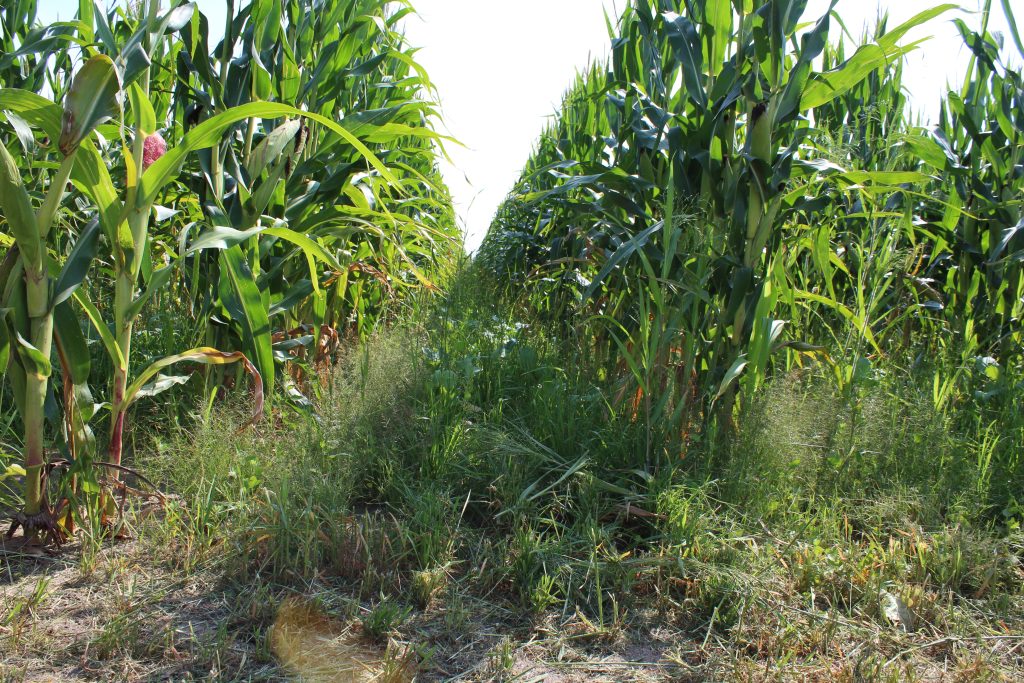
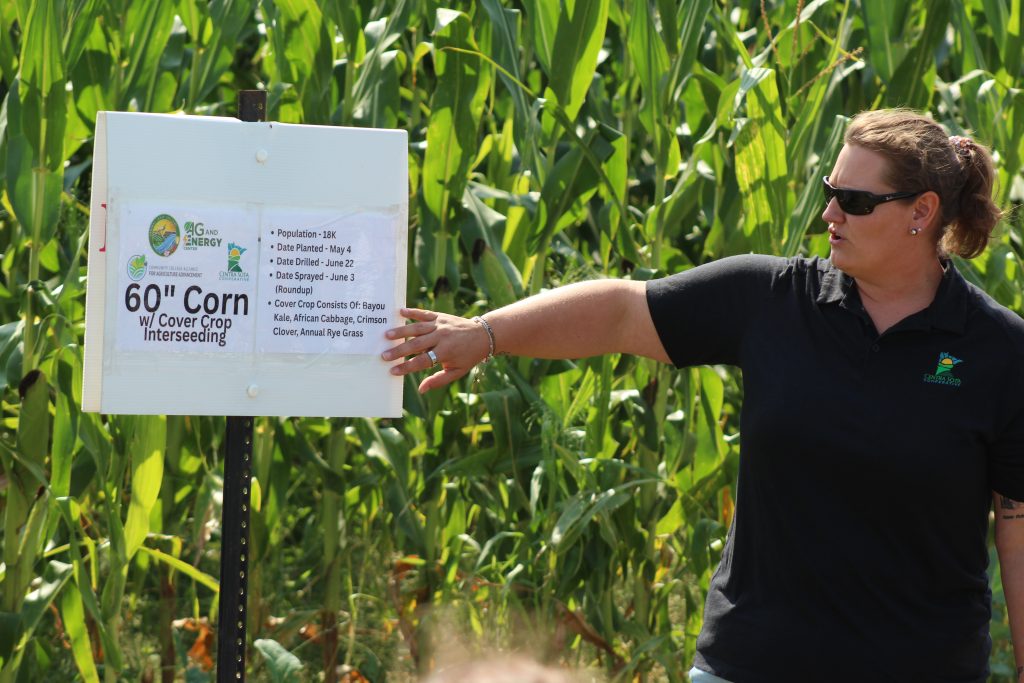
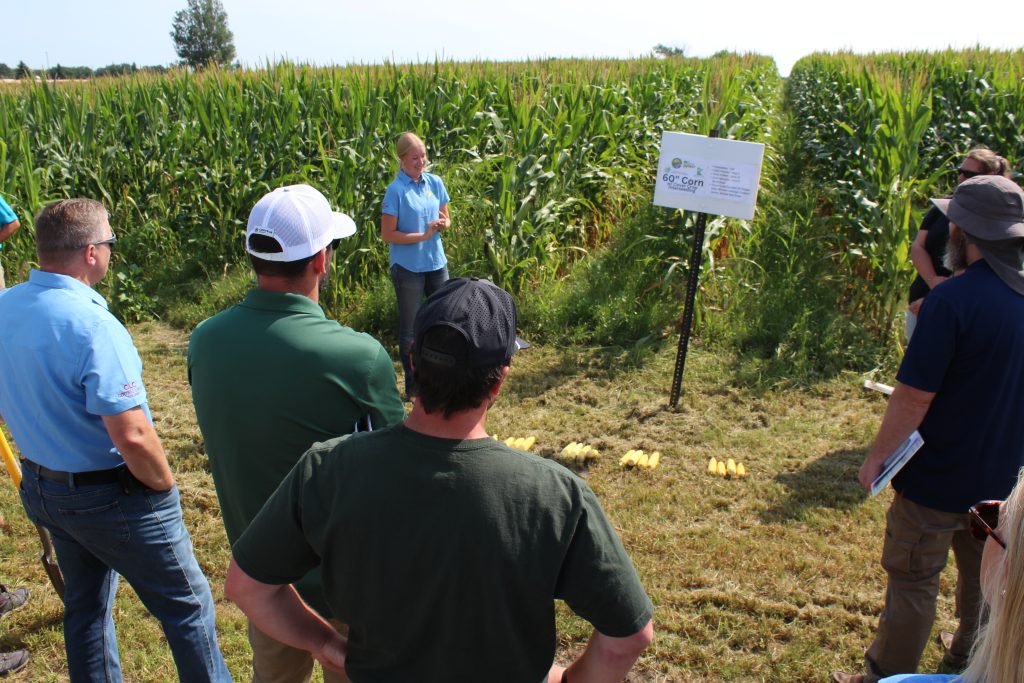
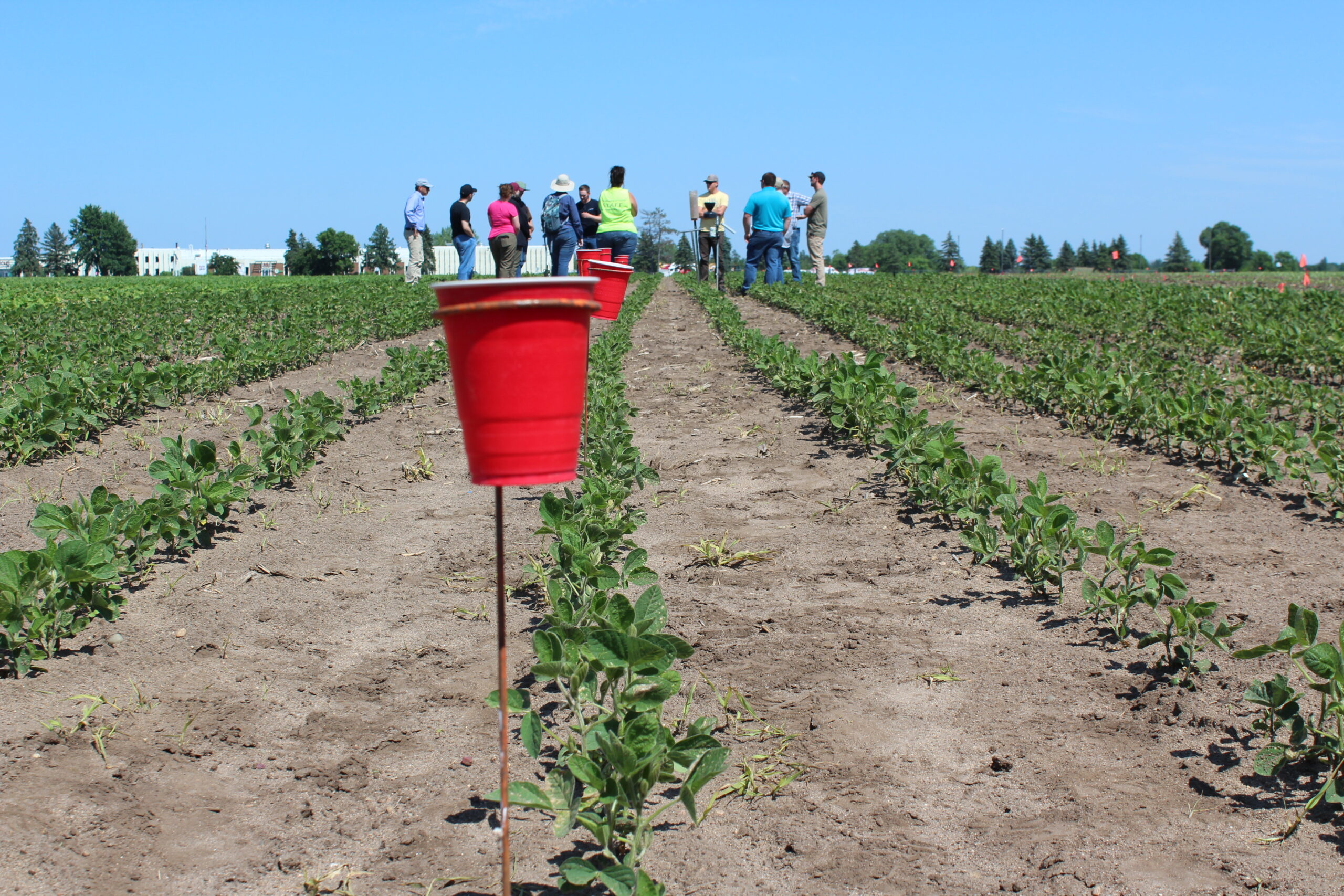
The group then moved into the field to practice those skills in one of the center’s most distinctive research plots: corn planted in 60-inch rows with cover crops growing between them.
Learning in a Working Research Plot
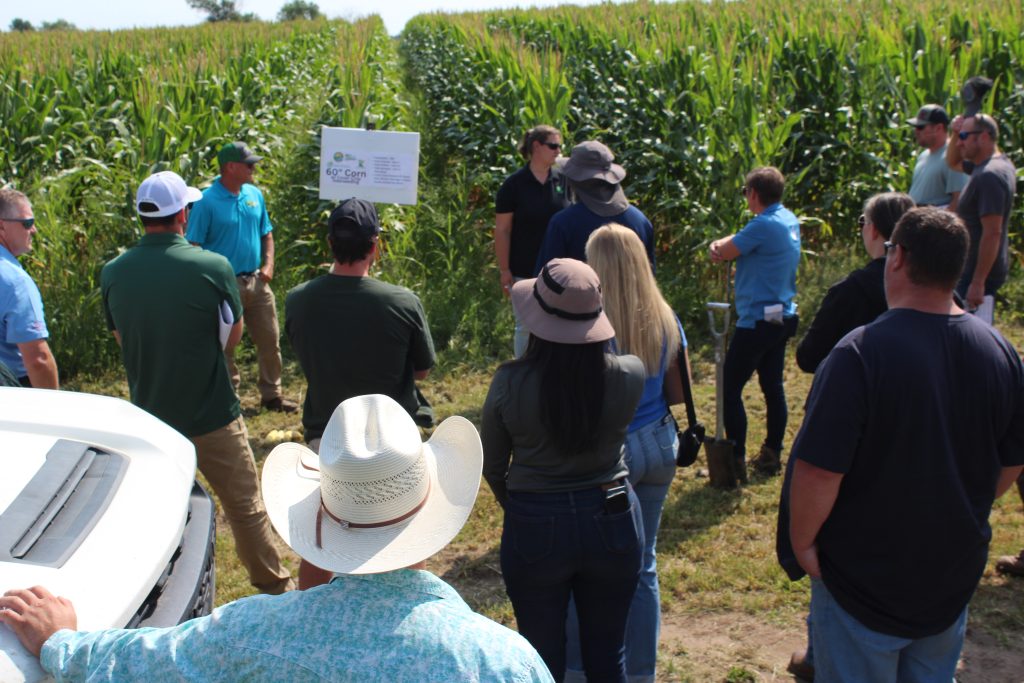
The 60-inch corn trial provided an ideal setting for participants to examine how soil health testing can be used to evaluate agricultural management practices over time.
Unlike conventional 30-inch corn rows, the wider spacing allows more sunlight to reach the cover crops planted between the corn. The system is being studied for its potential effects on cover crop establishment, soil health, water management, crop performance and long-term sustainability.
The trial also incorporates soil moisture sensors, giving researchers and agricultural partners another source of information as they study how wider rows and cover crops influence conditions in the field.
Using an active research plot allowed participants to move beyond classroom discussion and work through the soil sampling process under real field conditions. They considered how management practices, soil variability and sampling locations can influence results and how careful sampling helps create a dependable soil health baseline.
Looking Beyond Traditional Soil Tests
CEMA 216 is a USDA-NRCS financial assistance opportunity that allows eligible producers to hire qualified individuals or Technical Service Providers to conduct approved soil health testing.
The testing goes beyond traditional soil fertility analysis by examining the biological, chemical and physical characteristics of the soil. Required indicators include wet aggregate stability, soil organic carbon, soil respiration, labile carbon, bioavailable nitrogen, soil pH and soil texture.
These measurements can help producers and conservation professionals better understand how management practices are affecting water infiltration, nutrient cycling, biological activity, soil structure and the soil’s ability to support a productive crop.
Proper sampling is an important part of the process. CEMA 216 requires a planned sampling strategy, multiple composite samples and careful documentation of where and how each sample was collected. Samples must also be stored and submitted correctly to protect their biological integrity and produce useful results.
The training helped participants understand not only how to collect the samples, but also how to meet NRCS documentation and laboratory requirements and use the results to support future management decisions.
Partners Bring Different Expertise to the Field
Centra Sota’s participation connected the training with the growing role agricultural cooperatives and crop advisers play in helping producers navigate conservation programs and incorporate soil health practices into their operations.
Centra Sota provides services related to CEMA 216, cover crops, conservation agronomy, nutrient management and other state and federal conservation programs. Its partnership with the CLC Ag & Energy Center also supports ongoing research and demonstrations involving 60-inch corn, cover crops and soil moisture monitoring.
The University of Minnesota Soil Health team contributed research-based knowledge about soil health measurements and their meaning, while USDA-NRCS provided expertise connected to CEMA 216 standards, program requirements and technical assistance.
The CLC Ag & Energy Center provided the classroom space, working research fields and hands-on environment needed to bring those areas of expertise together.

Connecting Research, Education and Agriculture
The training reflects the CLC Ag & Energy Center’s role as a place where education, applied research, conservation and industry can work together.
By hosting professional development within active research plots, the center gives participants an opportunity to practice technical skills while examining emerging production strategies under Minnesota growing conditions.
The information gathered through the 60-inch corn, cover crop and soil moisture trial will continue to support conversations about soil health, water management and crop production. The plot will also be featured during the CLC Ag & Energy Center Field Day on Friday, August 28.



)
You must be logged in to post a comment.